Herui Liao, Ph.D.

Assistant Professor & PI

School of Computer Science and Artificial Intelligence, SUAT

I lead a microbial computational biology and AI group developing intelligent algorithms, open-source tools, and data resources for microbiome and microbial genome research. Previously, I was an MIT-Novo Nordisk AI Postdoctoral Fellow at MIT.

Join the Lab View Publications
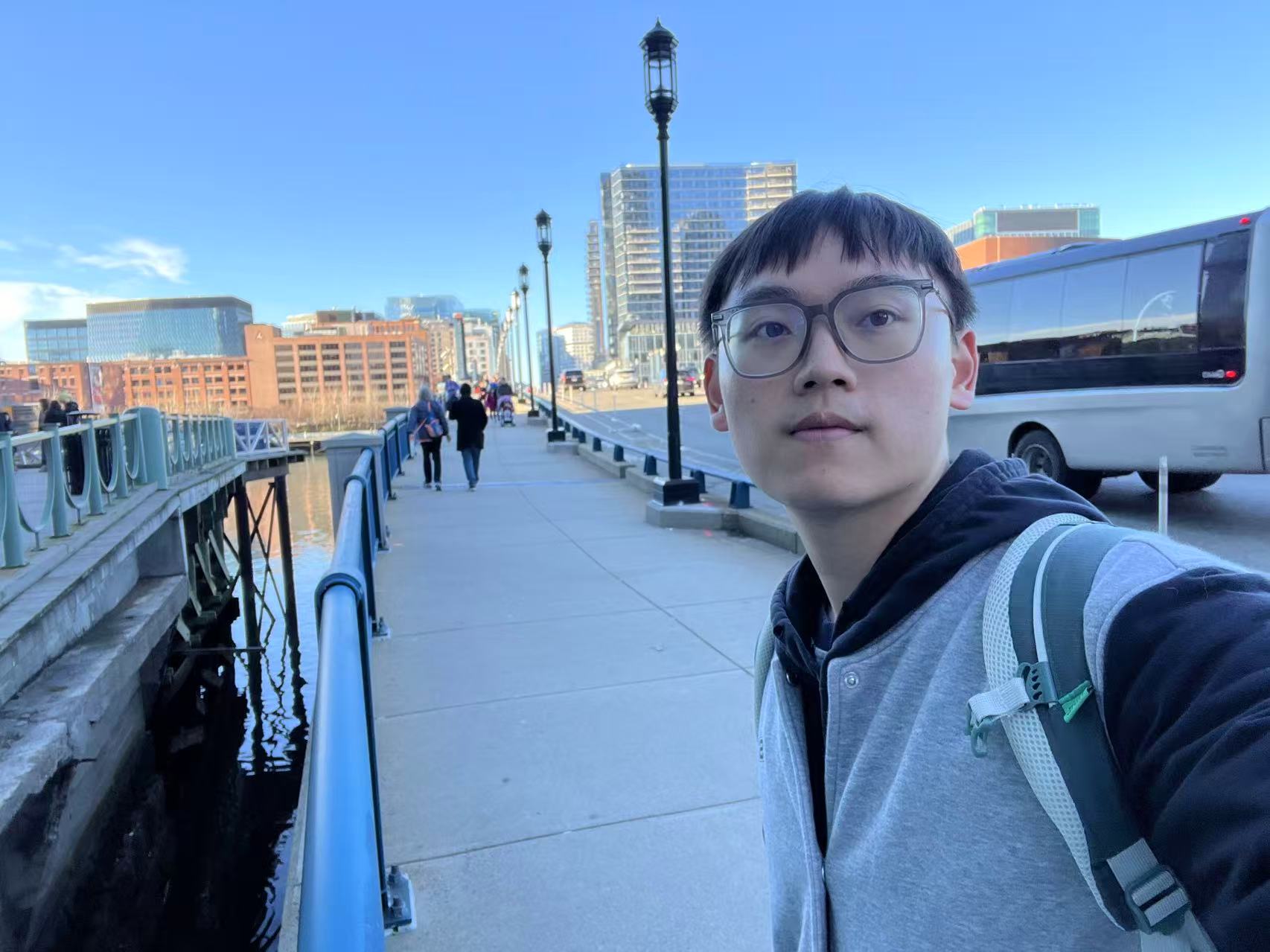
Profile Photo
We are hiring

Openings and research opportunities in Shenzhen

We welcome Research Assistant Professors, postdocs, Ph.D. students, research assistants, and motivated undergraduate interns interested in microbial computational biology and AI.

Computational Biology

Novel algorithms & methods

Bioinformatics

Data analysis & pipelines

Microbiology

Microbiome & pathogens

Deep Learning

Generative AI for biology

About Me

I am a Tenure-track Assistant Professor and Ph.D. supervisor at the School of Computer Science and Artificial Intelligence, Shenzhen University of Advanced Technology (SUAT). My research group works at the intersection of microbial computational biology, artificial intelligence, and bioinformatics.

Before joining SUAT, I was selected as an MIT-Novo Nordisk AI Postdoctoral Fellow and conducted postdoctoral research at MIT. I received my Ph.D. from City University of Hong Kong in 2024, after earlier work as a bioinformatics engineer.

My work includes creating open-source tools like StrainScan, which provides high-resolution strain-level microbiome composition analysis, and contributing to genome annotation pipelines that accelerate biological discovery.

The lab is recruiting motivated researchers who enjoy building useful computational methods and asking biological questions with real-world impact.

Research Interests

Computational Biology

Developing computational approaches to understand complex biological systems

Machine Learning

Applying AI/ML methods to biological problems in microbial studies

Microbiome Analysis

Strain-level analysis and host-microbe interaction studies

Genome Annotation

Novel methods for annotating genetic elements in genomes

Bioinformatics Tools

Creating open-source softwares and web servers for the research community

Systems Biology

Integrative analysis of multi-omics data

Research Overview

Our lab combines computational biology, machine learning, and microbiology to address fundamental questions in microbial systems

Strain-Level Microbiome Analysis

Developing computational methods to resolve microbial communities at unprecedented resolution. Work on VirStrain and StrainScan enables researchers to identify and quantify viral and bacterial strains in complex microbiome samples.

Key Contributions:

  • Novel k-mer based approach for strain identification
  • High-throughput analysis pipeline processing large-scale samples
  • Validated across multiple cohorts and datasets

Machine Learning for Genomics

Applying deep learning and representation learning to microbial genomes, antimicrobial resistance, biological sequences, and multi-omics data.

Key Contributions:

  • Apply GCN and domain adaptation to enhance cross-study disease prediction
  • Use multimodal transformer to improve the accuracy of AMR prediction
  • Utilize across-sample patterns learned by CNN to achieve high-precision SNV calling for bacterial isolates
  • Environment-aware representation learning for microbial data

Open Science & Tool Development

We are committed to reproducible research and community-driven science. Our tools are publicly available via GitHub, with documentation that helps researchers use and extend them.

Publications

High-accuracy SNV calling for bacterial isolates using deep learning with AccuSNV

Liao H., Conwill A., et al.

Genome Research, 2026 • Published online July 2026

 GitHub Repository   Paper Link

Accelerating de novo SINE annotation in plant and animal genomes

Liao H., Ou S., Sun Y.

Mobile DNA, 2024 • 1 citation

 GitHub Repository   Paper Link

GDmicro: classifying host disease status with GCN and deep adaptation network based on the human gut microbiome data

Liao H., Shang J., Sun Y.

Bioinformatics, 2023 • 10 citations

 GitHub Repository   Paper Link

StrainScan: High-resolution strain-level microbiome composition analysis

Liao H., Ji Y., Sun Y.

Microbiome, 2023 • 30 citations

  GitHub Repository  Paper Link

VirStrain: a strain identification tool for RNA viruses

Liao H., Cai D., Sun Y.

Genome Biology, 2022 • 19 citations

 GitHub Repository  Paper Link

Characterizing the Host Coral Proteome of Platygyra carnosa Using Suspension Trapping (S-Trap)

Ma H.*, Liao H.*, et al.

Journal of Proteome Research, 2021 • 14 citations

  Paper Link

A comprehensive investigation of metagenome assembly by linked-read sequencing

Zhang L.*, Fang X.*, Liao H.*, et al.

Microbiome, 2020 • 24 citations

 Paper Link
View all on Google Scholar →

Research Projects & Tools

Open-source bioinformatics tools and computational methods

StrainAMR

A learning-based tool to predict antimicrobial resistance and identify AMR-related genomic features from bacterial strain genomes

Python Pytorch Transformer Multimodal modeling Shap

Join Us

The Microbial Computational Biology & AI Lab at SUAT is recruiting researchers who want to build useful computational methods for microbiome, microbial genomics, antimicrobial resistance, and AI-driven biological discovery. Prospective Ph.D. students, research assistants, and undergraduate interns are also very welcome to get in touch.

Research Assistant Professor

1 opening

  • Lead or co-lead projects in microbial computational biology, AI, and bioinformatics.
  • Mentor students and help build a collaborative, method-driven research group.
  • Strong postdoctoral experience and independent research record are expected.

Postdoctoral Fellows

2 openings

  • Work on algorithm development, microbial genome analysis, and AI models for biology.
  • Applicants from bioinformatics, computer science, mathematics, microbiology, and related fields are welcome.
  • Competitive support, housing resources, and Shenzhen/SUAT talent programs may be available.

Ph.D. Students

Prospective students welcome

  • Ideal for students excited by computational biology, AI, microbiome, microbial genomics, and algorithm development.
  • Strong programming, quantitative thinking, or wet-lab biological insight are all valuable starting points.
  • Please email with your CV, transcript if available, and a short note on research interests.

Research Assistants

RA opportunities

  • Work on data curation, bioinformatics pipelines, model evaluation, databases, and open-source tools.
  • Suitable for candidates preparing for graduate study or interested in hands-on computational biology research.
  • Experience with Python, Linux, machine learning, genomics, or microbiome data is helpful.

Undergraduate Interns

Research internships

  • Motivated undergraduates are welcome to contact me for research internships.
  • Projects can start from literature reading, reproducible analysis, tool testing, or small model-building tasks.
  • Curiosity, consistency, and willingness to learn matter more than having every skill on day one.

Research Directions

Microbiome & microbial genomes AI for microbial function prediction Antimicrobial resistance Microbial databases & knowledge bases Generative AI for biological sequences

How to Apply

Please send your CV to liaoherui@suat-sz.edu.cn with a concise subject line such as “Postdoc/PhD/RA/Intern - Name - Background”. For official Research Assistant Professor and postdoctoral positions, please also refer to the SUAT posting.

Official SUAT Posting Gaoxiaojob Listing Email CV

Lab Notes

Notes on computational biology, microbial AI, and open-source research

Coming soon

Research updates from the Microbial Computational Biology & AI Lab

Short notes, tool updates, and perspectives will appear here as the lab grows. For now, publications, projects, and open positions are the best places to learn about current work.

View open positions →
Curriculum Vitae

Last updated: August 2026

Official Posting

Appointments

Assistant Professor / Principal Investigator

School of Computer Science and Artificial Intelligence, Shenzhen University of Advanced Technology, 2026-Present

  • Leading the Microbial Computational Biology & AI Lab
  • Specially Appointed Associate Professor and Ph.D. supervisor
  • Recruiting Research Assistant Professor, postdocs, Ph.D. students, RAs, and undergraduate interns

Education

Ph.D. in Computational Biology

City University of Hong Kong, 2019-2024

GPA: 3.85/4.3 • Dissertation: Computational Methods for High-resolution Microbial Composition Analysis and Relevant Applications

B.S. in Bioinformatics

Dalian University of Technology, 2014-2018

GPA: 3.3/4.0 • Honors in Bioinformatics

Research Experience

MIT-Novo Nordisk AI Postdoctoral Fellow

Massachusetts Institute of Technology, 2024-2026

  • Developing machine learning methods for high-accuracy SNV calling of bacterial isolates
  • Building AI foundation model for microbial studies
  • Secured $150K in postdoctoral fellowship funding

Bioinformatics Engineer

KMBGI, 2018-2019

  • Developed pipelines for metagenomics assembly evaluation
  • Analyzed large-scale datasets from different platforms
  • Contribute to the building of information platform "BencaoQuan"

Awards & Honors

MIT-Novo Nordisk AI Postdoc Fellowship

MIT and Novo Nordisk, 2024 • $150k (USD) over 2 years

HK300 Seek Fund

City University of Hong Kong, 2023 • $100k (HKD)

HKSAR Government Scholarship Fund

City University of Hong Kong, 2022

Outstanding Academic Performance Award for Research Degree Students

City University of Hong Kong, 2022

Research Tuition Scholarship

City University of Hong Kong, 2022

Technical Skills

Programming Languages

Python, R, Perl, C++, Shell scripting, JavaScript, ...

Machine Learning

TensorFlow, PyTorch, scikit-learn, Keras, XGBoost, ...

Bioinformatics

Metagenomics, Genome assembly, Variant calling, Genome Graph, ...

Tools & Platforms

Git, Docker, Singularity, HPC clusters, Linux/Unix, AWS

Teaching & Service & Leadership

Teaching

Teaching Assistant of three classes at City University of Hong Kong.

MIT Kaufman Teaching Certificate Program (KTCP) program.

Reviewer

Nature (co-review), NAR (co-review), Microbiome, BMC Bioinformatics, BMC Genomics, BMC Microbiology, Scientific Reports......

Conferences

RECOMB 2025 - Seoul, Korea

CSHL Microbiome 2024 - New York, US

Mentor

Supervise and mentor students and early-career researchers in computational biology and AI-driven microbial research.